How Termite and Pest Management Protects Brisbane Homes
Imagine you’re relaxing in your Brisbane home one evening when you notice tiny bubbles in the paint near a skirting board. It might seem harmless, but it could be a termite colony feasting on the house’s bones. In one horror-story case, a homeowner ignored such subtle signs – and ended up with over $70,000 in repairs that insurance wouldn’t cover.
Queensland’s warm, humid climate is basically termite paradise, and CSIRO research found termites do more damage to Aussie homes than storms or floods combined.
Worse still: about 1 in 5 Australian homes face a termite attack each year and the kicker is, standard home insurance typically excludes termite damage. In other words, these tiny wood-munchers are like hidden robbers: by the time you see the evidence, the theft (of your house’s structural integrity) is already done.
That’s why effective termite and pest management is not optional; it’s mandatory insurance for your castle. With smart precautions and regular inspections, you can keep invaders at bay and avoid costly surprises. Think of it this way: you’d never skip brake checks on your car, so don’t skip pest checks on your home.
Why Termite and Pest Management Matters in Brisbane
Subtropical Brisbane is basically termite paradise. Queensland’s climate lets these wood-gnawing insects thrive year-round, and most houses (whether classic Queenslander or new slab build) give them easy pickings.
In fact, the Queensland Government’s termite info page notes about 10 native subterranean termite species attack timber here – including the notorious Coptotermes acinaciformis. Termite damage isn’t just scary; it’s expensive. Industry data show the average repair cost for an infested house is around $10,000.
CSIRO research makes it clear termites do more damage to Aussie homes than storms or fires. Yet about 1 in 5 houses face a termite attack each year, and the Queensland Government warns that these infestations can go unnoticed until significant structural damage occurs. In short, skipping termite checks is like gambling with your home’s future.
And it’s not just termites. Other pests bring health hazards too. Rats and mice chew wiring and can spread diseases like leptospirosis and salmonella, while cockroaches contaminate surfaces with E. coli and Salmonella and worsen asthma from their allergens. As one pest expert warns, “pests are vectors for numerous diseases… [their] droppings or saliva may cause allergic reactions”.
Put simply: Brisbane’s climate and construction styles invite invaders, and their damage (to property and health) can be severe. Regular termite and pest management is the guard at the gate – protecting your home’s structure and your family’s well-being.
How Termite and Pest Management Works
So how do you actually defend your home? Effective termite and pest management is usually a multi-pronged approach:
Physical Barriers:
Think of these as the castle walls. Licensed installers fit things like steel mesh, stone infill, or cement “ant caps” under the structure. In Brisbane, new homes are required to have accredited termite systems that comply with Australian Standard AS 3660.1. These invisible shields block termites from ever touching timber. Even existing houses can add metal barriers around subfloor posts or weep holes to deter sneaky invaders.
Chemical Treatments & Baits:
Pest professionals often dig trenches around the foundation and apply termiticides, creating a toxic moat. Alternatively, they might install bait stations in the yard or near infested wood. The bait is laced with a slow-acting poison, which termites carry back to their colony. Important note: in Queensland any termite-chemical work must be done by a licensed applicator, ensuring it’s effective and safe for your family.
Habitat Management:
A big part of termite and pest management is cutting off their conveniences. Fix water leaks, clear out leaf litter and old logs from under the house, and keep garden beds and mulch at least 300 mm below walls. A Queensland guide warns that garden beds or woodchips touching a house can “bridge” a protective barrier. In practice, keeping soil clear of your walls and ventilating subfloors can dramatically lower pest risk.
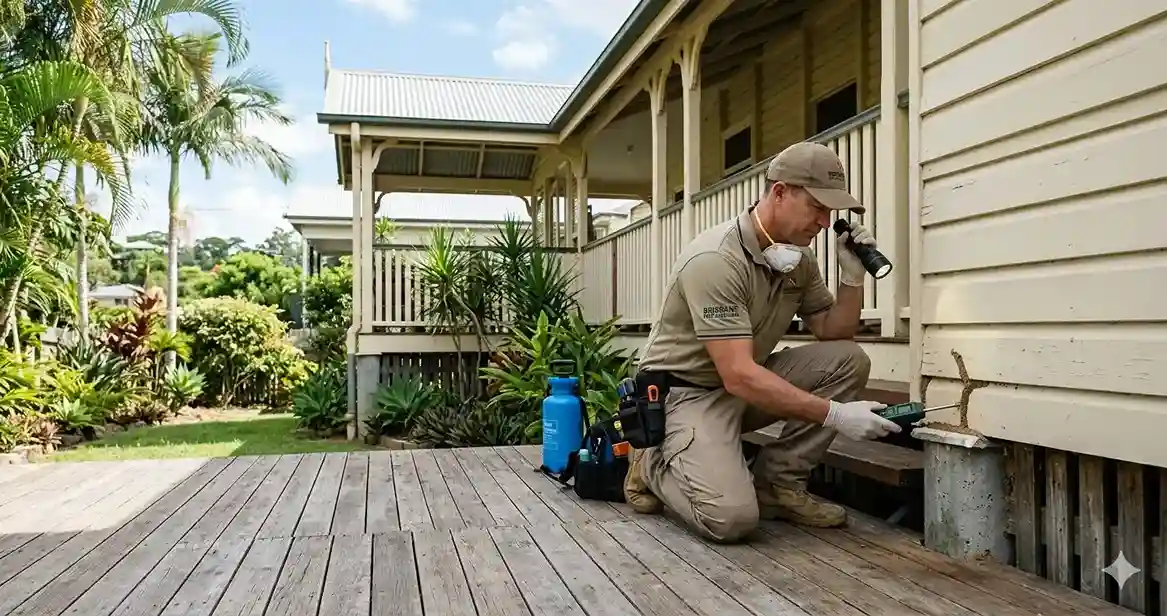
Quick tip: always use a flashlight and a tap on wood beams when inspecting – many termite tunnels or dry rot spots are only noticeable by sound or shadow.
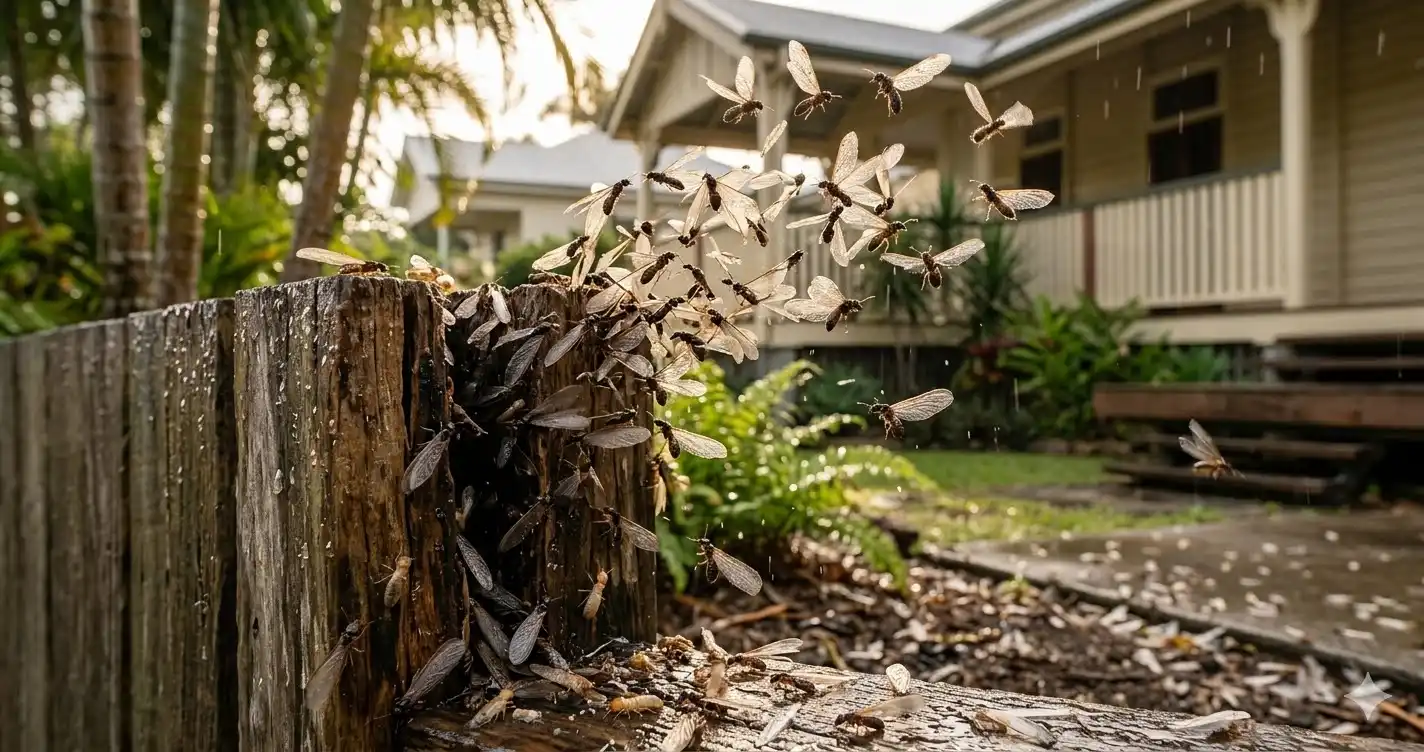
This natural event signals an active colony nearby – a major reason for regular termite and pest management inspections, especially in Brisbane’s wet season. Termite swarms are nature’s alarm bell. In Brisbane’s warm, humid months (often after heavy rain) it’s common to see dozens of winged termites at dusk.
Those swarmers are reproductive termites heading off to start new colonies. If you spot such swarms or find discarded wings near your door, call in the pros immediately. Even without visible swarmers, a licensed inspector can find tunnels or mud tubes that betray a hidden infestation.
Common Pests in Brisbane and Protection
Apart from termites, many critters can invade your home. Here’s a quick rundown of typical pests, their dangers, and how good management keeps them out:
|
Pest |
Why It’s Dangerous | Protection (Termite & Pest Management) |
|
Termites |
Costly structural damage (~$10K avg per house) | Physical barriers (mesh, ant caps); soil treatments and baiting; yearly inspections. |
|
Rats & Mice |
Chew wiring; contaminate food; spread leptospirosis/salmonella | Seal entry points; set traps/bait stations; remove debris and food. |
| Cockroaches | Carry E. coli, Salmonella; worsen allergies |
Keep kitchen spotless; use bait gels and borate dust; professional sprays if needed. |
| Spiders | Venomous bites (redback, funnel-web can be serious) |
Declutter crawl spaces; clear webs; use targeted insecticides in dark corners. |
| Other pests | Possums, wasps, birds: noise, stings, droppings, roof damage |
Humane possum traps/removal; remove wasp nests; install screens to exclude birds. |
Notice that termite and pest management covers a range of tactics: it’s not just about spraying bug spray. For example, a comprehensive plan might include vacuuming for spiders, rat baiting, and sealing cracks around the house. The common goal is to make your home an unappealing habitat for any pest.
DIY vs Professional Termite and Pest Management
It can be tempting to tackle pests yourself. Bunnings sells plenty of sprays and traps, and some homeowners handle small issues with do-it-yourself fixes (glue boards for mice, ant gels, etc.). These DIY steps (sealing cracks, setting out basic baits) can help with minor invaders.
But for serious threats like termites, DIY is risky. According to pest experts, professional termite control “offers protection from costly damage by detecting and eliminating infestations before they cause extensive harm”. Pros have specialized tools (thermal cameras, moisture meters, and powerful termiticides) that you likely don’t have lying around the garage.
DIY measures:
Seal visible gaps; keep woodpiles and mulch away from your house; clean crumbs promptly; use off-the-shelf ant/roach gels. Good hygiene and maintenance are your first line of defense.
Professional services:
A licensed pest controller performs thorough annual checks (often required to maintain guarantees), applies EPA-approved treatments, and may install long-term systems like bait stations. They can also offer eco-friendly or low-toxicity options. Importantly, they often warranty their work – something a one-time spray can’t promise.
Bottom line: having a pro handle termite and pest management is usually worth the investment. For example, I’ve learned that spending a few hundred dollars on a termite protection plan now can save you from a $10K-plus repair bill later. Many Brisbane pest services even sell subscription-style plans so your home is continuously covered, trading a modest annual fee for big peace of mind.
Trends in Termite and Pest Management
Pest control is getting greener and smarter. Nowadays, many Brisbane companies advertise eco-friendly treatments that protect your kids and pets. Instead of harsh poisons, modern products might use botanical ingredients or controlled-release baits.
High-tech solutions are emerging too: imagine wireless sensors in bait stations alerting your phone to termite activity, or thermal scanners and trained dogs sniffing out hidden nests. Even community networks play a role – neighbors share pest alerts through apps or social media, helping everyone stay informed.
In short, termite and pest management is evolving with the times. But no matter the method, the goal remains classic: a pest-free home.
Conclusion
Your Brisbane home is your castle – and termite and pest management is the unseen guard protecting it. We’ve seen how Brisbane’s climate makes pests a constant threat, how costly those hidden colonies can be (sometimes tens of thousands of dollars), and how simple precautions and inspections can thwart disaster.
Ready to act? Start by booking a termite inspection with a licensed provider. They’ll scout for mud tubes, damage or moisture and recommend solutions. Don’t forget to check after heavy rains (when termite swarmers emerge), and seal any small gap a bug could crawl through. And of course, maintain good housekeeping to starve out cockroaches and rodents.
Don’t let pests take over your Brisbane home. Whether it’s termites, rodents, or bed bugs, professional management is the safest way to protect your property and family. For expert bed bug control services in Brisbane, contact RapidKil today and take the first step toward a pest-free home.
FAQ
-
What is the best time of year for termite inspections in Brisbane?
Termite activity peaks during Brisbane’s warm and wet months, often after heavy rain. Scheduling an inspection in spring or after a wet season can help detect swarms or hidden colonies early.
-
Can I prevent termites with DIY methods alone?
DIY steps like sealing gaps, removing timber debris, and keeping mulch away from walls help reduce risk, but they rarely offer full protection. Professional termite and pest management ensures early detection, proper chemical treatments, and long-term prevention.
-
How do termite baiting systems work?
Baiting systems use slow-acting termiticides that worker termites carry back to the colony. This gradually eliminates the entire colony without using large amounts of chemical, making it safer for families and pets.