Complete Guide to Termite and Pest Control in Brisbane Homes
Brisbane’s warm, subtropical climate provides the perfect conditions for termites and other pests to thrive. From the cozy warmth of your living room to damp garden beds, these uninvited guests can be hard to spot until the damage is done. Termites in particular – sometimes called “white ants” – are incredibly destructive, quietly eating through timber and costing Aussie homeowners millions in repairs.
In fact, research shows Queensland’s climate is an ideal termite breeding ground, and roughly one in three Brisbane properties will encounter termite activity at some point. With termite and pest control, the goal is to stay ahead of these critters: annual inspections, good prevention habits, and timely treatments can save you from a nightmare $10,000+ bill. Read on to learn how to spot pests early, protect your home, and safely get rid of infestations when they occur.
Why Termite and Pest Control Matters in Brisbane
Brisbane’s climate — hot, humid summers and mild winters with heavy rains — not only feels great for us, but also for pests. That same warmth and moisture “fosters a thriving termite population”. Termites live year-round here because they love warm temperatures; unlike colder regions, they don’t slow down for winter. These tiny insects can chew through floorboards, door frames, roof timbers and more, often causing invisible damage long before you notice any sign.
In Queensland, termites actually cause more property damage than fires, floods and storms combined. Brisbane homeowners pay over $1 billion a year on termite inspections, treatments and repairs, and many discover too late that insurance won’t cover termite damage.
But it’s not just termites. A range of pests like ants, cockroaches, spiders, rodents and even birds can invade homes. Ants (including red imported fire ants) swarm kitchens and yards; cockroaches can contaminate food; rodents chew wiring; spiders (like redbacks) pose bite risks. For example, the federal biosecurity authority warns that the red imported fire ant is “one of the worst invasive species” to reach Australia, making it a priority in pest control programs. Each pest has its own habits and hazards, but they share one thing in common: if left unchecked, they can damage property and health. Effective termite and pest control is therefore a must for Brisbane homes, not an optional extra.
Common Brisbane Pests at a Glance
Preventing infestations starts with knowing who the culprits are. The table below summarizes Brisbane’s most common household pests, their tell-tale signs, and basic control tips:
|
Pest |
Signs & Damage |
Prevention & Control |
|
Termites |
Mud “tubes” on walls, hollow-sounding timber, discarded wings; decayed wood (sometimes hidden behind paint). | Install physical barriers (meshes, treated plastics) and soil treatments around foundations. Use baiting systems if drilling is impractical. Keep clear inspection zones (no mulch or wood-to-soil contact). Annual termite inspections by licensed pros can catch colonies early. |
|
Cockroaches |
Dark droppings, musty odours, egg casings, seeing live roaches (especially at night). | Keep kitchens and bathrooms clean and dry. Seal cracks and food sources. Use baits, traps or sprays. For major infestations, hire professionals. |
|
Ants (incl. Fire Ants) |
Visible ant trails, mounds in lawn (fire ants), tiny bites or stings from fire ants. |
Store food in sealed containers, remove spills immediately. Trim plants away from house. Use bait stations for crawling ants. Note: Red imported fire ants must be reported immediately – they are illegal pests. If you see them, call the Exotic Plant Pest Hotline. |
| Rodents (Rats & Mice) |
Rat droppings, gnaw marks on food packs or wires, rustling noises in walls or ceiling. |
Seal any gaps in walls or floors. Keep food in metal/air-tight containers. Use traps or bait stations. If problems persist, professional removal is safest to avoid disease. |
| Spiders | Spider webs in corners, small crusts (molted skins). Bites may occur (e.g. redback spider). |
Reduce clutter (spiders love dark hideouts). Remove webs promptly. Use insecticidal sprays around doorways and window frames if needed. |
Each pest requires its own approach, but the golden rule is keep a clean, dry, uncluttered home and yard. Remove firewood piles, fix leaking taps, and clear debris so pests have fewer hiding places. These steps make your property far less inviting to vermin.
Spotting the Signs of Infestation
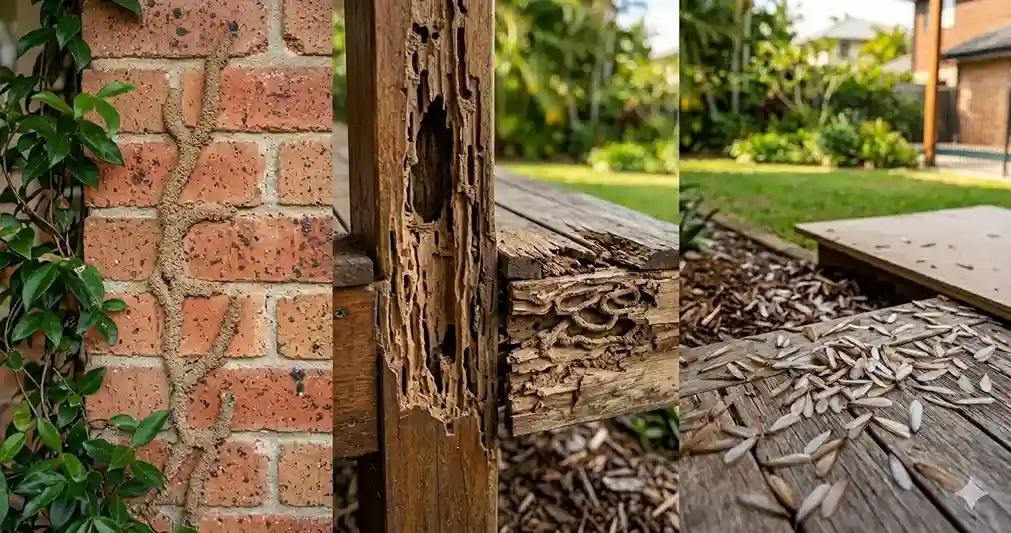
Early detection is everything. Termites in particular can eat silently for years; by the time you spot damage, the colony is huge. Keep an eye out for common tell-tale signs:
Termite clues
Mud tubes (thin, pencil-width tunnels of soil) on concrete or walls, wood that sounds hollow when tapped, and tiny discarded wings on windowsills (from swarmers). Other hints include bubbling or cracked paint, blistered skirting boards, or jammed doors (from moist, termite-damaged timber). As pest pros say, termites are like “invisible demolition crews” – they chew wood from the inside out, leaving just a veneer.
Other pests
Check under sinks and cupboards for droppings (cockroach or mouse), look for ant trails in the kitchen, or tiny holes/rusty scratch marks (possible mice nests). Spiders often leave webs in eaves or corners, and flying ants in summer can signal termite swarms too. Keep an eye on pet bowls and bedding – fleas, ticks and ants often show up there.
Don’t try to disturb suspected termite activity yourself – you might annoy the colony and spur more swarming. If you notice any of the above, call a licensed pest controller immediately for an inspection. Remember, the earlier you catch it, the cheaper the fix.
Preventing Termite and Pest Infestations
Keeping pests out is more effective (and less expensive) than fighting a full-blown infestation. Brisbane homeowners should follow these maintenance tips year-round (or consider them after renovations):
Maintain a termite “inspection zone” around your slab. That means no soil, mulch or plants touching the exterior walls or footings. Leave at least a 40–50 cm clear strip of concrete or paving. Keep that area dry – fix leaking hoses or taps, and point gutter downpipes away from the slab.
Seal entry points. Check and re-caulk around door frames, windows, pipes and wiring gaps. Termites can squeeze through hairline cracks, and rodents through even smaller holes. A bit of steel wool or silicone caulk in the holes can deter them.
Ventilate and reduce moisture. Ensure sub-floor or under-house cavities have good airflow and aren’t damp. Clear away leaves, timbers and debris from under raised floors. Clean out gutters so rainwater drains away from your home.
Store firewood and mulch properly. Wood piles, cardboard or mulch next to the house are termite hotspots. Keep any timber at least a couple of meters from the walls, and off the ground if possible.
Regular self-checks. Walk around your home every few months. Look for any new mud tubes, cracked timber, or other signs mentioned above. Using a simple screwdriver or pen, probe suspicious wood – if it feels soft or hollow, don’t ignore it.
These tips will help you catch problems early. For example, the Queensland Building and Construction Commission notes that a visible termite management notice (showing the install date of your system and inspection schedule) must be displayed in the meter box. The commission also provides official guidance for homeowners on how to protect against termites and maintain termite and pest control protection systems. It advises homeowners to stick to annual reviews by licensed inspectors. By making your home unfriendly to pests (and staying proactive), you dramatically reduce the chance of surprise infestations.
Termite and Pest Control Options in Brisbane
If pests do invade, what works to get rid of them? Below are some of the main control strategies:
Chemical Soil Treatments (Barriers)
Pest pros apply a liquid termiticide into trenches or drill holes in the soil around the house foundation. This forms an invisible toxic barrier that termites can’t cross. Modern chemicals (like fipronil or imidacloprid) have long lifespans in the ground. Sometimes a reticulation system is installed to make yearly “top-up” dosing easy. Concrete mow strips or piping around slabs can keep the barrier zone visible. While highly effective, soil treatments require a licensed applicator – in Queensland, termite termiticides are controlled substances and must be handled by a certified pest controller.
Baiting Systems:
These use plastic stations baited with wood or paper impregnated with slow-acting toxins. Technicians bury them in the yard and check them periodically. Foraging termites find the bait, carry it back to the nest, and (over weeks) spread the poison through the colony.
Baiting is ideal near sensitive areas (e.g. gardens or waterways) or where drilling is not possible. However, it requires patience – it can take months to eliminate a colony. Many Brisbane homes use a combination: a physical/chemical barrier on one side and baits in others.
Physical Barriers:
These are built into the structure. Examples include stainless-steel mesh, crushed rock (graded stone), or specialized plastics beneath slabs. They don’t kill termites, but force them to the surface or onto clear ground, where they can be spotted at inspection. Queensland’s Building Code even lists several mandatory termite-resistant construction details (around door frames, architraves, etc.). If you’re building or renovating, ask your builder about materials like treated timber, masonry, or steel footings.
Direct Treatments:
For active infestations inside, pest companies may use localized treatments: injecting foam or dust into wall voids, or tenting/fumigation (rare, for severe cases). Heat or Orange Oil treatments are often marketed as “green” solutions, but they only kill what they directly contact and are not guaranteed for entire colonies.
In all cases, professional guidance is key. The cost of a thorough pre-emptive termite system (barrier or bait) is often a few thousand dollars, whereas re-building after major damage can be tens of thousands. One QLD study found “prevention costs a few hundred dollars annually” whereas repairs “cost tens of thousands”. Choosing the right method depends on your property’s specifics, so consult a licensed termite specialist.
DIY vs. Professional Pest Control
Many homeowners wonder: “Can I just spray some bait or call an exterminator online?” Here’s the lay of the land:
DIY Pest Control:
For everyday pests (ants, cockroaches, fleas, etc.), basic home remedies and store-bought sprays can help. You can apply ant baits, set sticky traps for cockroaches, and use ultrasonic plug-ins for mice. Keeping the house clean, removing water sources and food crumbs, and sealing cracks are all DIY-friendly prevention steps.
However, these often only address visible symptoms. For infestations beyond a few insects or mice, home products usually fail to eliminate the colony root cause.
Termites and Serious Infestations:
Termite treatment is not a DIY job. Federal law restricts termiticide use to licensed professionals. A layperson applying termiticide incorrectly can be ineffective or dangerous. Rodents with large nests, or wasp nests in eaves, also often need specialists for safe removal.
Professionals have the training, safety gear and products (some can’t be sold to consumers) to handle pests thoroughly. They also know where pests hide – for instance, a termite inspector will check subfloors, roofing, and all possible entry points.
Cost Consideration:
Professional services cost money (for example, a Termidor barrier installation might be $1,000+ depending on house size). But consider this: Cure All Pest Control notes that an annual termite inspection (few hundred dollars) can prevent a $70,000 repair bill. Many Brisbane homeowners report wishing they’d invested in inspections long before damage appeared. Think of it like car maintenance or health check-ups: the upfront cost is far less than fixing a crisis later.
Reliability and Warranty:
Reputable pest control companies offer guarantees. They’ll service traps or renew termiticides on schedule. They carry insurance to cover any incidents during treatment. In contrast, unlicensed or fly-by-night operators may vanish, leaving you unprotected. Always check that the pest controller has a QBCC licence (for termites/structural pests) and look for reviews or professional affiliations.
In short: use DIY fixes for minor, temporary nuisances, but hire a pro for serious termite or rodent issues. A licensed team will ensure the job is done safely and completely, often backed by a warranty.
Regulatory and Safety Considerations
In Queensland, pest control has rules for good reason. For termites, the Building Code of Australia (BCA) is clear: new homes must have termite and Pest Control protection, and a Termite Management Notice must be displayed (usually in the meter box). This notice records what termite system is installed, installation dates and how long the chemicals last. It also lists how often the home should be inspected.
Homeowners are legally responsible for maintaining that system. The QBCC (Queensland Building & Construction Commission) advises: inspect annually with a licensed pest professional. They also warn that actions like adding garden beds, concreting slabs, or building decks can break the barrier if not done carefully. If you renovate or landscape, always plan to reinstate the termite protection afterwards.
Safety is another factor. Many pesticides and fumigants are toxic. Professionals use equipment and procedures to protect you, your family and pets. For example, they might apply termiticides in the soil only when no one is around. They follow the APVMA guidelines on chemical use and safe exposure times. For your own protection, do not spray unknown poisons yourself, and always read labels on store-bought insecticides. If in doubt, ask a pro.
Conclusion
Living in Brisbane means living with pests – but you don’t have to live for pests. With a bit of effort and the right knowledge, you can greatly reduce the risk and impact of infestations. The key takeaways are:
- Stay vigilant. Learn the signs (mud tubes, droppings, etc.) and check your home regularly.
- Prevent aggressively. Clear clutter, fix leaks, seal entry points and follow the Brisbane “clear zone” advice.
- Inspect often. Don’t wait for swarms. Schedule a professional termite inspection at least once a year. It’s a cheap insurance policy against catastrophic damage.
- Act fast. At the first hint of termites or a bad rodent infestation, call a licensed pest controller. Early treatment is cheaper and easier than letting problems grow.
Pest control isn’t glamorous, but it’s essential home-keeping. Think of termites and pests as an ongoing home maintenance item – like servicing air conditioners or cleaning gutters. By being proactive and informed, you protect your biggest investment: your home.
Ready to take action? Look up local licensed pest professionals (or QBCC licence holders) for advice. Consider getting a building inspection or pest audit, especially before buying or renovating a home. And share your own tips or questions in the comments below – what’s worked for your Brisbane house?
FAQ
-
How often should I have a termite inspection?
For Brisbane homes, annual inspections by a licensed technician are strongly recommended. In wet/humid seasons or older homes, you might check even more frequently. Regular checks catch trouble early.
-
Can DIY methods stop termite infestations?
Basic DIY (orange oil, borates) might kill some visible termites, but won’t solve a hidden colony. Only licensed pros can apply effective termiticides or install barriers. Prevention (clear zones, moisture control) is DIY-friendly, but severe infestations require professional treatment.
-
What are the common pests in Brisbane homes?
Besides termites (wood-eaters), Brisbane homes often face ants (sugar ants, fire ants), cockroaches, spiders (redbacks, huntsman), rats/mice and fleas. Cockroaches thrive in kitchens and sewers; rodents in cluttered storerooms. Each needs different treatment, but all are worse if ignored.